
What Nobody Tells You About Digitizing an Archive — until it is too late.
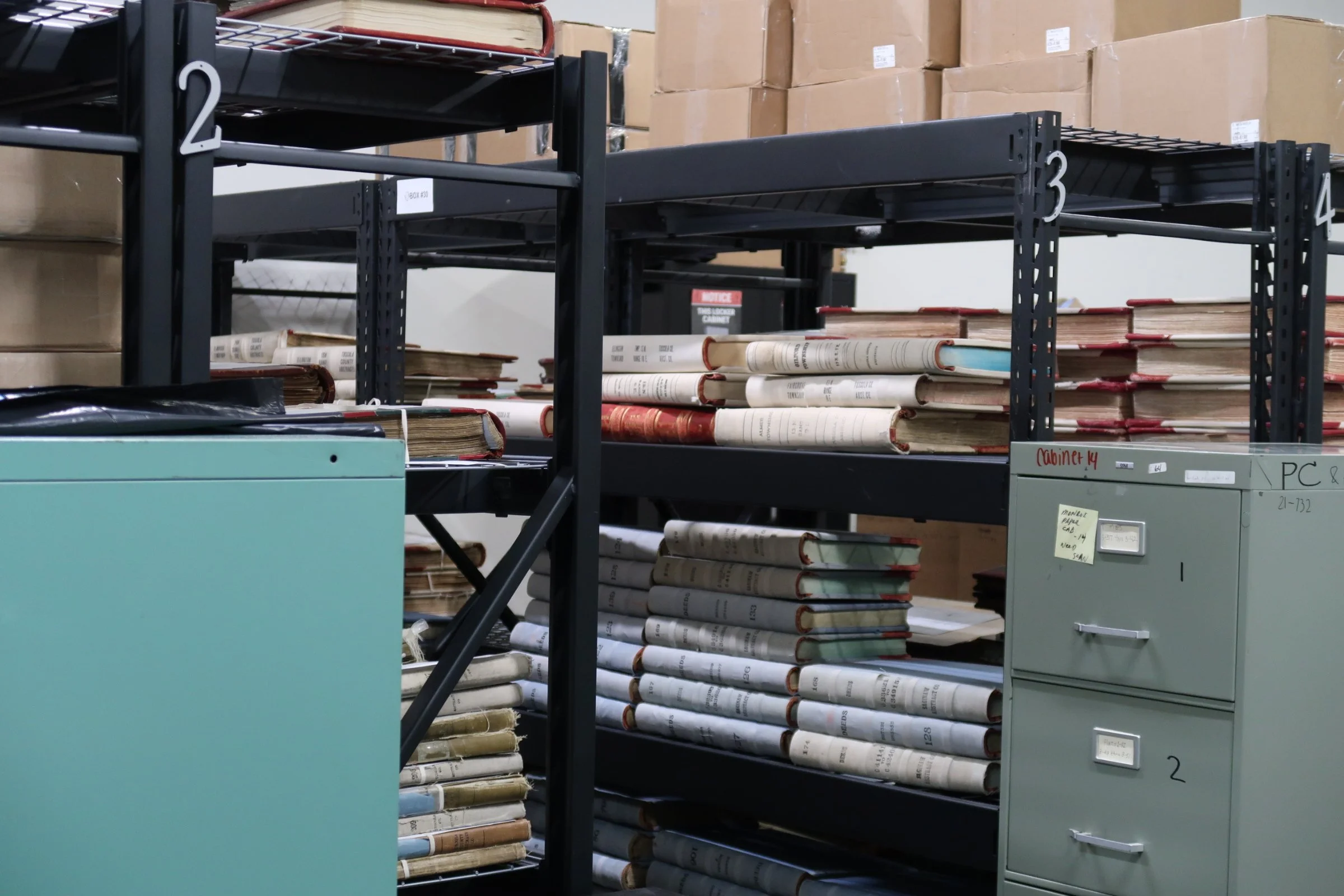
Most organizations planning to digitize an archive focus on the scanner. They ask about resolution, file formats, and turnaround time. What they rarely ask about is everything that has to happen before a single page touches a scanner.
Archival collections are rarely sitting in a clean, climate-controlled room, pre-sorted and ready to go. They're in basements, off-site storage units, retired employees' garages, or the back corner of a building that's changing hands next quarter. Getting that material out safely, intact, and with its context preserved is its own project — and it's the part that most digitization vendors don't plan for.
Here's what actually determines whether an archive digitization project goes smoothly.
1. The site visit matters more than the scan settings
Before you can plan packing, transport, or timeline, someone needs to physically see the collection. Photos and a phone call aren't enough. A proper site assessment answers questions that shape the entire project: What condition is the material in? Is it boxed already, and are those boxes structurally sound? Is there mixed media — photographs, film, oversized maps — mixed in with standard paper records?
Skipping this step is the single most common reason digitization timelines blow past their estimates.
2. Access and location constraints can quietly kill a timeline
A collection stored on a third floor with no elevator, or in an unfinished basement with a single exterior bulkhead door, requires a completely different transport plan than one sitting on pallets in a warehouse. Weather, staircases, narrow hallways, and even parking restrictions on the collection day all affect how — and how quickly — materials can be moved.
None of this shows up in a standard vendor quote. It shows up as a delay once the trucks arrive.
3. Staging space determines how fast your team can work
Packing and inventorying materials on-site requires room to spread out — table space, floor space, and a workflow that doesn't have staff tripping over each other. Organizations often underestimate how much space this takes, especially with fragile or oversized items that need extra handling care.
4. Chain of custody has to be documented from the first box
Before anything leaves the original location, there needs to be a clear inventory: what's being collected, in what condition, and by whom. This isn't paperwork for its own sake — it's what allows an institution to prove nothing was lost, damaged, or reordered between pickup and digitization. For regulated industries (healthcare, financial services, government), this documentation is often a compliance requirement, not a nice-to-have.
5. Transportation has to match the material, not the other way around
Climate-sensitive materials need climate-controlled vehicles. Fragile or oversized items need specific loading equipment and internal supports so nothing shifts in transit. And practical constraints — a gravel driveway that can't support a pallet jack, a loading dock that only fits a van, not a box truck — need to be identified before moving day, not discovered on it.
6. The people matter as much as the process
Teams handling archival material need to know the difference between how you move a box of business records and how you move a box of nitrate film or bound ledgers. Just as important: they need to be able to adapt when the on-site reality doesn't match the plan — because it often doesn't.
7. Descriptive context is easy to lose and hard to recover
Once materials are removed from their original storage order, informal context — how folders were grouped, handwritten notes on a box, a donor's explanation of why records were organized a certain way — can disappear if it isn't captured during the visit and pickup. Good digitization partners treat that context as part of the deliverable, not an afterthought.
How IIMI handles this differently
IIMI's process starts before the scanning does. Our teams conduct structured site assessments, plan for the physical realities of each location, and maintain documented chain of custody from the moment materials are identified for pickup through final digitization and delivery. With SOC compliance, ISO 27001 certification, and over 30 years of experience handling sensitive records for archives, healthcare systems, and financial institutions, IIMI treats the logistics of getting your archive digitized as seriously as the digitization itself.
If your organization has a collection that needs to move — whether it's a single site relocation or an ongoing legacy data transformation project — talk to our team about what a proper site assessment looks like for your materials.